


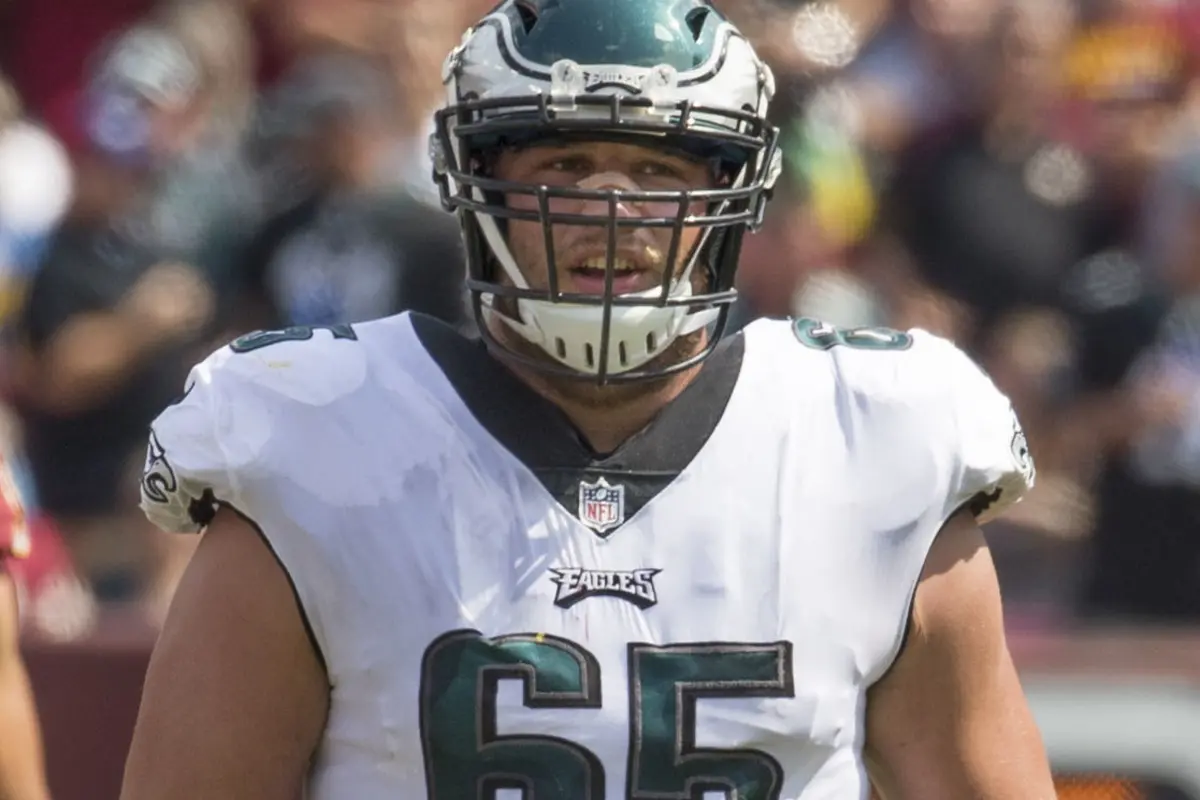
Lane Johnson, the right tackle who anchored the Philadelphia Eagles' offensive line for 14 seasons, announced his retirement from the NFL on Tuesday, ending a decorated career built entirely with one franchise. The announcement came via a statement posted to social media, just two days after the 36-year-old was a surprise inactive for Philadelphia's loss to the Los Angeles Rams.
A sudden exit four games into the season
Johnson, 36, appeared in the team's first three games in 2026, but did not play in the Eagles' 24-20 loss to the Los Angeles Rams on Sunday, with the team saying he was unavailable due to a personal matter. Two days later, he confirmed the absence was tied to his decision to step away from football for good.
The announcement came two days after he was a surprise scratch against the Los Angeles Rams for what the team called a personal matter. It brought a sudden end to a season Johnson had already signalled might be his last.
«It's time to say goodbye to football»
In his statement, Johnson explained the toll of pushing through one more campaign. "I deeply wanted to gut it out for one more year; to take the field with my brothers for one last season. But after a lot of reflection, I've realized that my personal and family priorities have changed. Right now it is critical that I focus on my mental health," he wrote in a statement posted to social media.
He added a line that made the finality clear. "I owe it to my teammates, coaches, the organization and the fans to have my head and heart 100 percent in the game. And right now my heart is telling me that it's time to say goodbye to football."
A long-running advocate for mental health
Johnson's openness about his struggles is not new. Johnson took a leave of absence during the 2021 season as he battled anxiety and depression and has since shared his story at mental health clinics in the area. That advocacy shaped how his retirement was received across the league.
Eagles chairman Jeffrey Lurie highlighted that part of his legacy in the team's statement. "Lane Johnson is an all-time Eagle and one of the best players ever to play his position in NFL history," Eagles owner Jeffrey Lurie said in a statement, adding that "Lane was a major contributor to our team success for 14 seasons, helping to bring two Super Bowl championships and many other memorable moments to the organization and the city of Philadelphia."
Family and health concerns had been building
Johnson had already hinted at this outcome. This summer, Johnson elected to return for what he expected to be his final NFL season after spending some time away from the team during training camp, and he played the first three games of this season. A Lisfranc foot injury the previous year, along with concerns about his ageing parents and young children, had also fed into his thinking about when to stop.
What it means for the Eagles' offence
Johnson's absence is already being felt up front. Rookie Markel Bell started in his absence, and he is the most likely candidate to replace Johnson in the lineup for the rest of the season as the 2-2 Eagles adapt to life without one of the best players in franchise history.
The numbers underline how much Philadelphia has leaned on him over the years. Including the playoffs, the Eagles boasted a .659 winning percentage when Johnson played compared to .375 when he did not.
A career built for Canton
Across nearly 14 seasons that saw six Pro Bowl selections, a pair of All-Pro honours, three Super Bowl berths and two Lombardi Trophies, Lane Johnson paved the way for Philadelphia Eagles success at right tackle. He was the fourth overall pick by the Eagles out of Oklahoma in 2013, and he leaves as one of the most durable and accomplished linemen of his generation.
That résumé has already sparked Hall of Fame talk. Eagles chairman Jeffrey Lurie, in the team's announcement, called him an all-time Eagle, praised his mental health advocacy and said he will one day be in the Pro Football Hall of Fame.
What comes next
For now, Johnson's focus shifts away from football entirely. He said as much in closing his statement, pointing to the people closest to him as the priority going forward. The retirement leaves Philadelphia's offensive line in transition just as the team tries to defend its place among the NFC's contenders, a storyline that will keep drawing attention well beyond this week — much like other major retirement announcements that have reshaped rosters across North American leagues, including in the CFL, where roster turnover is always closely watched. It also lands in a stretch where sudden departures of decorated veterans have been a recurring theme in pro sports, echoing the recent passing of a Stanley Cup-winning veteran whose career also closed out a long run with one era of his sport.